Back
Back
Arun - April 3, 2026
The 2026 FIFA World Cup is already taking shape long before kickoff. A new 48-team format and a North American setting introduce fresh variables, but the early hierarchy feels familiar.
Traditional powers still lead the conversation, fueled by recent success and deep, evolving squads. For bettors, these early signals offer a clear view of how markets value consistency, momentum, and long-term pedigree.
Attention now shifts to identifying the nations best positioned to sustain that momentum, particularly those combining recent success with depth and tactical stability, on the biggest stage in international football.
Spain has emerged as the analytical favorite heading into 2026, with odds hovering around +450. That positioning reflects more than just their Euro 2024 triumph, it reflects a system that has matured into something far more efficient.
This version of Spain is less predictable and more direct. Lamine Yamal’s creativity, Nico Williams’ pace, and Rodri’s control balance flair with discipline. Possession remains central, but now leads to penetration rather than stagnation.
Markets reward consistency, and Spain has delivered across multiple competitions. Their control against elite opponents keeps them atop early projections, with World Cup odds to win clearly reflecting that sustained form.
Defensive cohesion remains one area to monitor, but few teams enter the tournament cycle with as clear an identity. That clarity often proves decisive in high-pressure knockout matches where structure matters most.
England sits just behind Spain in early projections, typically priced around +600, and their appeal is easy to understand. Few squads can match their depth or versatility. That combination makes them one of the most balanced teams entering the tournament cycle.
Jude Bellingham continues to grow into a complete midfielder, while Harry Kane remains one of the game’s most reliable finishers. Phil Foden adds the creativity to break down compact defenses, supported by a squad that allows tactical flexibility without sacrificing quality.
That depth is crucial in a longer tournament, where rotation and adaptability often separate contenders from champions. England’s recent deep runs, however, have fallen just short, leaving winning it all as their biggest challenge on the international stage.
France continues to carry the aura of a team built specifically for World Cup success. With odds generally sitting around +650, they remain firmly in the top tier of contenders heading into the 2026 tournament cycle based on sustained success in recent tournaments.
Kylian Mbappé anchors a squad that thrives in high-pressure moments. France doesn’t need to dominate possession to control games, relying instead on quick, decisive transitions that exploit even the smallest defensive lapse against top-tier international opponents.
Experience underpins their consistency. Multiple finals in recent cycles have created a composure few teams can match, making France one of the safest projections for a deep run regardless of fluctuations in form throughout qualifiers and international competitions.
Argentina enters the 2026 cycle as defending champions, with odds often around +800 reflecting both confidence and uncertainty. Their recent run of major titles continues to shape how markets evaluate their chances.
Recent success has built a strong foundation. Winning the Copa América and World Cup in succession established a clear identity rooted in resilience and tactical discipline. This is a team comfortable in tight matches, capable of grinding out results when needed.
Lionel Messi remains central to the narrative, though his role is gradually evolving. Younger players have stepped forward, adding energy and ensuring the squad does not rely solely on past brilliance.
Defending a title brings added pressure, with opponents adjusting and expectations rising. Argentina must maintain its edge while adapting, and its odds reflect that balance between proven success and transition.
Brazil’s odds also sit in the +800 range, but their path to 2026 feels less certain than Argentina’s. A period of tactical transition has introduced both promise and inconsistency as they adjust under new coaching leadership.
The attack remains one of the most dangerous in the world. Vinícius Jr. and Raphinha headline a group capable of creating chances from almost nothing. Brazil’s ability to produce elite attacking talent has never been in doubt.
Structural balance, however, is still developing. Defensive depth and overall cohesion have been inconsistent, particularly during qualifying. A shift toward a more organized, collective system is underway, but it remains a work in progress.
History continues to shape expectations. Brazil’s five World Cup titles and success on North American soil give them a level of credibility that few teams can match. Even during transitional periods, they remain firmly in the contender conversation.
Portugal rounds out the leading group, typically priced around +1100. That positioning reflects a team just outside the top tier, but close enough to challenge based on squad depth, experience, and recent international form.
This may be Portugal’s most complete squad in modern history. Bruno Fernandes provides creativity and leadership, Bernardo Silva adds control and intelligence, and Rafael Leão brings pace that can stretch any defense.
Depth is a defining strength, allowing Portugal to adapt tactically without losing identity. They can approach matches in multiple ways, adjusting to different opponents across a long tournament.
Consistency remains the key question, as strong group-stage form hasn’t translated into knockout success, shaping market perception. Momentum shifts quickly, and following the latest soccer news and trends helps track Portugal’s trajectory.
The expanded format introduces dynamics that could reshape the tournament. More matches increase physical demands, while an extra knockout round raises upset potential, forcing even the strongest teams to adapt.
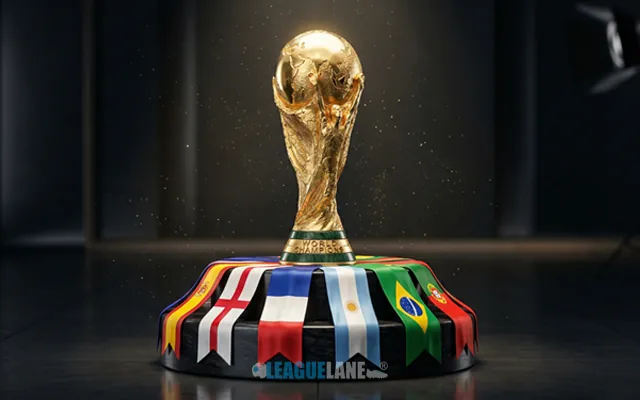
Spain, England, France, Argentina, Brazil, and Portugal all present strong cases as contenders, each blending talent, structure, and experience in different ways. Early odds offer a useful snapshot, but remain far from definitive.
International football rarely follows a script; form shifts, new stars emerge, and results quickly change momentum. The 2026 World Cup will test adaptability as much as talent, with the most flexible teams likely to define it.
*Content reflects information available as of 27/03/2026; subject to change