Back
Back
Arun - June 29, 2026
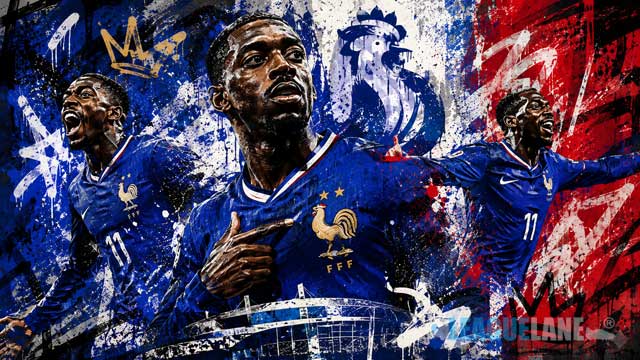
Some hat-tricks build slowly. A striker scores early, the game opens up, and the third goal comes when the opposition is already tired. Ousmane Dembélé’s against Norway felt different.
France were already in control, but Dembélé gave the match its sharp edge. He completed his hat-trick inside the first 32 minutes, turning a World Cup game into one of those nights where everything happens too quickly for the other team to fix it.
It was not just the speed of the goals. It was how clean the whole performance looked. Dembélé can sometimes look like a player who wants one extra touch, one extra trick, one extra chance to beat his man. Here, he was direct. He received the ball, attacked the space, and finished without hesitation.
Norway could not get close enough to stop him, but they also could not stand off him. That is the problem with Dembélé when he is in this kind of mood. Show him inside and he can shift the ball. Push him wide and he still has the pace to hurt you. Give him a yard near the box and he can finish with either foot.
Dembélé’s hat-trick was one of the quickest completed from the start of a World Cup match, but it was not the fastest World Cup hat-trick ever.
That record still belongs to László Kiss, who scored three goals in seven minutes for Hungary against El Salvador in 1982. Dembélé’s treble is still special because he had completed it by the 32nd minute, while the game was still fresh and Norway were still trying to find a foothold.
For anyone watching live, that is what made it feel so brutal. There was no long spell of pressure, no slow collapse. It was three sharp blows before half-time, and the match never really recovered from them.
1. László Kiss for Hungary in 1982
László Kiss holds the record for the fastest hat-trick in World Cup history. He scored three times in seven minutes against El Salvador in 1982.
The wild part is that he came off the bench. He entered a match Hungary were already dominating and made it even worse for El Salvador. Three goals in seven minutes is still the World Cup benchmark, and it has survived for decades.
2. Gabriel Batistuta for Argentina in 1998
Gabriel Batistuta scored a ten-minute hat-trick for Argentina against Jamaica in 1998.
This was classic Batistuta. No fuss, no wasted movement, just power and finishing. He lived for those moments in the box, and Jamaica gave him the space that a striker like him rarely forgives. His hat-trick is still one of the best examples of a proper centre-forward taking over a World Cup game.
3. Gustav Wetterström for Sweden in 1938
Gustav Wetterström scored three goals in 12 minutes for Sweden against Cuba in 1938.
It came from a very different football era, but the record still stands. Football was not as structured as it is now, but a 12-minute hat-trick at a World Cup is still a serious achievement. It also shows how rare these bursts are. Even across decades of tournaments, only a few players have managed anything close.
Dembélé does not beat the seven-minute record set by Kiss, but his hat-trick deserves to be talked about because of how early it arrived.
An early hat-trick hits differently. The opposition have trained all week for one match plan, then suddenly that plan is gone inside half an hour. Norway would have prepared for France’s pace, their wide players and the danger around Kylian Mbappé. What they got was Dembélé flying through the game before they had a chance to slow it down.
There was also something very Dembélé about it. He did not look like a traditional poacher waiting in the box. He looked like a winger with freedom, confidence and perfect timing. When he plays with that kind of clarity, he is one of the hardest attackers in football to read.
In a game that often gets pulled into numbers, odds and even online casino-style talk around risk and reward, Dembélé’s hat-trick was a reminder that football can still be decided by pure instinct. One player finds his rhythm, defenders start guessing, and suddenly the match is gone.
France already have stars. They already have pace, power and tournament experience. What Dembélé gave them against Norway was something even more dangerous: another match-winner who looked completely switched on.
That is a nightmare for opponents. If they focus too much on Mbappé, Dembélé can attack the other side. If they double up on Dembélé, France have space elsewhere. This is why his hat-trick felt bigger than just one player having a good game. It showed how quickly France can punish a team from different angles.
The best part for France was how simple Dembélé made it look. No forced tricks. No messy decision-making. Just sharp movement, clean touches and finishes that killed the game early.
Dembélé’s name may not sit above László Kiss in the record books, but this was still one of the standout World Cup hat-tricks. It had pace, timing and that sudden feeling that the match had slipped away before Norway could react. Now the question is whether he can do it again against Sweden, or whether Mbappé decides it is his turn to steal the show. With this France attack, another explosive World Cup moment never feels too far away.